
Five years of Helmi Habitats Programme – rehabilitation of small water bodies and forest nature management as bright spots in 2025
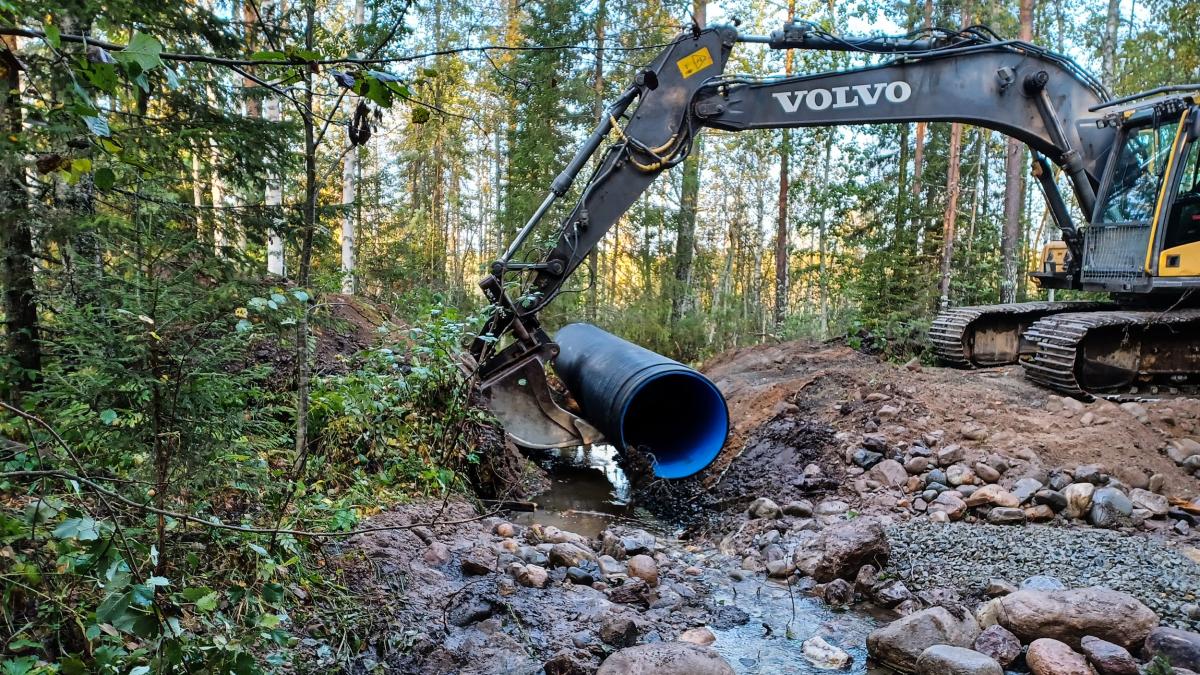
The Helmi Habitats Programme has enhanced the understanding of ways to improve the state of nature and created an important foundation for the preparation of the National Restoration Plan.
The Helmi Habitats Programme 2021–2030 strengthens biodiversity in Finland and safeguards the vital ecosystem services provided by nature. In 2025 measures under the programme were implemented in a broad range of valuable habitats, including mires, forests, small water bodies such as brooks and springs, birdwaters, and semi-natural grasslands such as different kinds of meadows. Measures concerning the rehabilitation of small water bodies and forest nature management were particularly successful.
The Helmi Habitats Programme has now been implemented for five years. It has enhanced the understanding of the rehabilitation and restoration of habitats and nature management.
“The Helmi Programme has succeeded in making ways to improve the state of nature more widely known. Programmes that are based on voluntary action are also seen as means that are easy to accept for the implementation of the Nature Restoration Regulation. I am very happy that, through the Helmi Programme, we have ensured continuity to the financing and practices that will benefit both landowners and, of course, the Finnish nature,” Minister of Climate and the Environment Sari Multala says.
“Through the Helmi Programme, measures such as the removal of fish migration barriers, management of small water bodies and rehabilitation of mires have become part of responsible business operations and sustainable forestry on state-owned lands, in line with the ownership policy concerning Metsähallitus,” Minister of Agriculture and Forestry Sari Essayah says.
Forest management measures carried out in 800 valuable forest nature sites, rehabilitation of small water bodies makes good progress
Forest nature management measures made good progress last year. Management measures that are important for forest nature, such as the management of herb-rich forests, were carried out in more than 120 sites in protected areas and on 38 hectares in state-owned multiple-use forests. During the whole programme period, management measures have been carried out in 800 valuable forest habitat sites.
Last year, burning of forests in protected areas that mimics forest fires and is important for biodiversity was carried out on 28 hectares. In state-owned multiple-use forests prescribed burning was carried out on 630 hectares.
Good progress was made in the rehabilitation of small water bodies as well. A total of 60 springs were rehabilitated and barriers to fish migration were removed in 110 sites, most of these located in state-owned multiple-use forests. A total of 47 kilometres of brooks were rehabilitated on state-owned lands that are in commercial use, 24 kilometres in protected areas and 12 kilometres on private lands. The aim for 2025 was to clearly focus more on increasing the management of small waters bodies in state-owned multiple-use forests.
The rehabilitation of open shore habitats such as sandy beaches, dunes and shore meadows continued and in 2025 this was carried out in 64 sites.
Almost 24,000 hectares of mires restored, 83 wetland habitats for birds established
Last year about 4,400 hectares of mires were protected and almost 3,000 hectares were restored. During the whole programme period almost 24,000 hectares of mires have been restored. Water was returned to protected mires in 26 sites and this new restoration method has already been used under the Helmi Programme in more than a hundred sites.
Rehabilitation of birdwaters was completed in 10 sites in protected areas. The measures also included management fishing, mowing, clearing and dredging. In the SOTKA gamebird project that is part of the Helmi Programme, 16 bird wetlands were established and rehabilitated outside the protected areas and the number of such projects completed during the whole programme period is 83.
The capturing of alien predators such as minks and raccoon dogs continued in 70 valuable bird water sites.
The number of protection and resting areas important for waterfowl established under the programme was 13. At the end of 2025 the network of resting areas during birds’ autumn migration established under the SOTKA project covered 49 sites. It offers disturbance-free places for birds to feed and rest before their autumn migration.
With respect to semi-natural grasslands such as different kinds of meadows, the Helmi Programme aims to increase the surface are of the sites that are already being managed and improve the quality of the sites. In 2025 Parks & Wildlife Finland of Metsähallitus and the Centres for Economic Development, Transport and the Environment rehabilitated almost 700 hectares of valuable semi-natural grassland sites.
Voluntary programmes essential in implementing Nature Restoration Regulation
The process to prepare the National Restoration Plan under the Nature Restoration Regulation is under way in Finland. Programmes aimed to promote biodiversity that are voluntary for landowners have a key role in the implementation of the plan. These are the Helmi Habitats Programme, Forest Biodiversity Programme for Southern Finland METSO, Ahti Programme on improving the state of waters and marine areas, and Migratory Fish Programme NOUSU.
Helmi Habitats Programme
Helmi is a joint programme of the Ministry of the Environment and Ministry of Agriculture and Forestry that covers the whole country. The programme consists of 40 measures. Besides rehabilitation, restoration and management, the work under the programme comprises information management related to the measures and enhancing skills in the rehabilitation of habitats, including the revised mire restoration guide published in 2025. The interim evaluation of the Helmi Programme completed in 2025 sums up the progress in the measures under the programme and assesses the relevance of the operating model and the challenges involved.
The parties implementing the Helmi Programme are the Economic Development Centres (former Centres for Economic Development, Transport and the Environment), Parks & Wildlife Finland of Metsähallitus, Metsähallitus Forestry Ltd, Finnish Forest Centre and Finnish Wildlife Agency, and numerous municipalities, associations and landowners. Practical actions are often carried out by local contractors. Actions are targeted to sites both within and outside the protected areas.
Read the 2025 results of the Helmi Habitats Programme
Inquiries:
Maaret Väänänen
Programme Manager of the Helmi Habitats Programme
Ministry of the Environment
[email protected]
tel. +358 50 593 9803
Ville Schildt
Senior Ministerial Adviser
Ministry of Agriculture and Forestry
[email protected]
tel. +358 40 721 0687