
Citizens’ panel declaration: the most important thing is to prevent the state of nature from further deteriorating
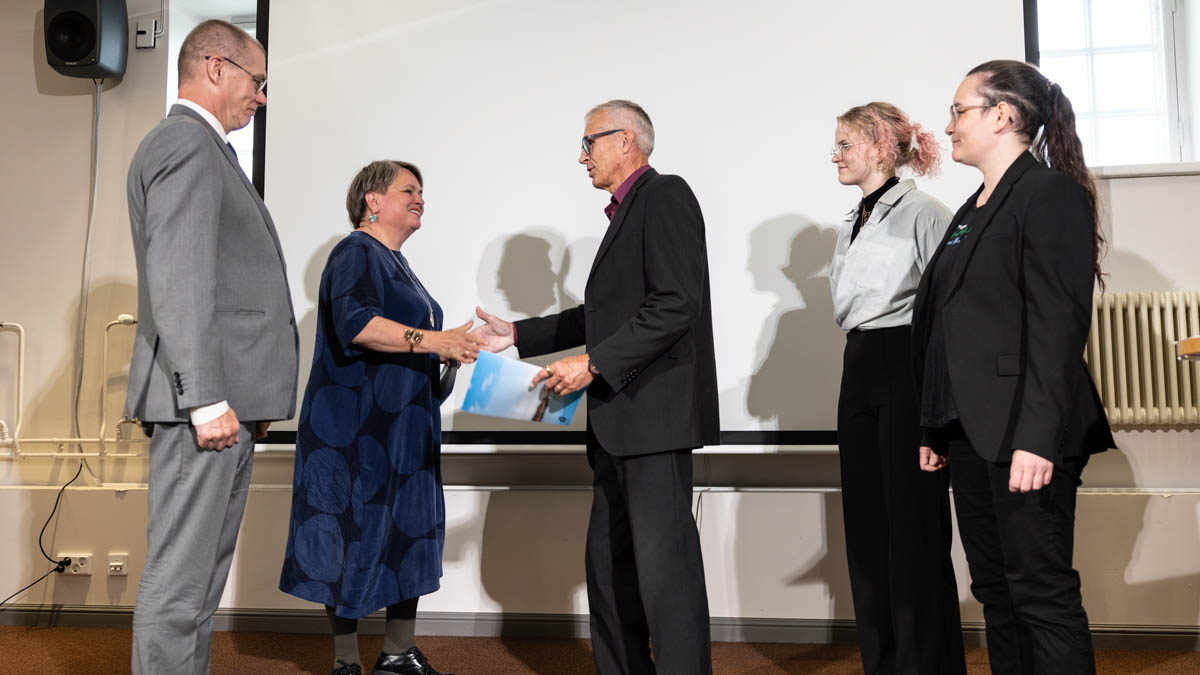
The citizens’ panel on improving the state of nature has issued a declaration to support the preparation of Finland’s national nature restoration plan. In its declaration, the panel stresses that biodiversity loss should be one of the most important criteria in decision-making.
The panel convened in May and June to collect recommendations and measures that citizens consider important and acceptable ways to improve the state of nature. The declaration will support the ministries in drawing up Finland’s national nature restoration plan, which will be submitted to the European Union in August 2026.
The declaration takes stock of the current situation, outlines the most important and welcome measures to improve the state of nature, and puts forth recommendations on how to ensure that restoration measures are implemented fairly.
The declaration notes that improving the state of nature requires both voluntary and, where necessary, binding measures. It stresses that the measures should not weaken Finland’s food production or security of supply.
“The most important thing is to prevent the state of nature from further deteriorating. We must ensure that we do not weaken the state of nature in one place while improving it in another,” the panel notes in its declaration.
The panel consisted of 44 Finns from across the country selected through random sampling and quotas. The participants were of different ages, lived in different areas and came from different backgrounds. The panel held four virtual meetings.
Important to highlight impacts of restoration measures
According to the declaration, restoration work should begin with the most threatened habitat types, the least resource-intensive areas and those areas where restoration will take the longest. Finland should focus on those habitat types that are at the greatest risk of disappearing.
It is important to highlight the impacts of restoration measures in those areas where the impacts are greatest and most noticeable – this increases public acceptance of restoration work.
The declaration also stresses the need to take into account the entire ecological context of restored areas:
“Restored and protected areas must be sufficiently large and interconnected to allow animals to move freely and safely between them.”
Central and local governments must set an example
In its declaration, the panel highlights restoration as an essential part of the work to safeguard biodiversity and human wellbeing. The work should begin with the most threatened habitat types and areas where restoration will take time or bring the greatest benefit. Examples of measures include rewetting drained mires, removing barriers to migration in flowing waters, increasing grazing on semi-natural grasslands and strengthening the vitality of local nature, including in cities.
“Restoration has its costs, but doing nothing will also lead to significant costs in the long term. The economic benefits of the Regulation on Nature Restoration are difficult to assess and can often be seen indirectly and over the longer term, as the state of nature improves,” says the declaration.
According to the panel, the central and local governments should set an example of systematic work to improve the state of nature.
Focus on fairness and inclusion
The declaration emphasises that the impacts and costs of restoration must be distributed fairly. Decision-making must be inclusive, and the voices of all parties affected by the measures must be heard.
The panel emphasises the importance of voluntary measures but also points out that binding measures may be needed if voluntary ones are not enough. Binding measures should involve a transition period and financial compensation, especially for private landowners and the areas most affected by the measures:
“Actors that weaken the state of nature should be held financially responsible. If activities lead to biodiversity loss, those responsible must be held liable for the damage or have a way to compensate for it.
In addition, the panel proposes financial incentives, such as subsidies and tax incentives, to guide operators towards choices that are more sustainable from an environmental standpoint. The development of environmental taxation for actors responsible for biodiversity loss was also considered necessary.
Citizens hope that local volunteer work, such as efforts to eradicate invasive species and restore local nature, will be actively supported. Increasing communication and guidance at the local level was seen as an important way to improve opportunities for participation.
“Halting biodiversity loss should one of the most important criteria in decision-making, and it should always be taken into account. Nature and humans will win in the long term if we really take action to stop biodiversity loss. This requires a spirit of togetherness.”
The deliberative citizens’ panel was organised by the Ministry of the Environment, co-financed by Sitra and implemented by Motiva. The Ministry of Agriculture and Forestry also participated in the planning and implementation.
Finland has until August 2026 to present its national restoration plan to the European Commission. The declaration of the citizens’ panel will be discussed by the working groups drawing up the plan this autumn.
Inquiries
Outi Ala-Honkola
Senior Specialist
tel. +358 295 250 431
[email protected]